
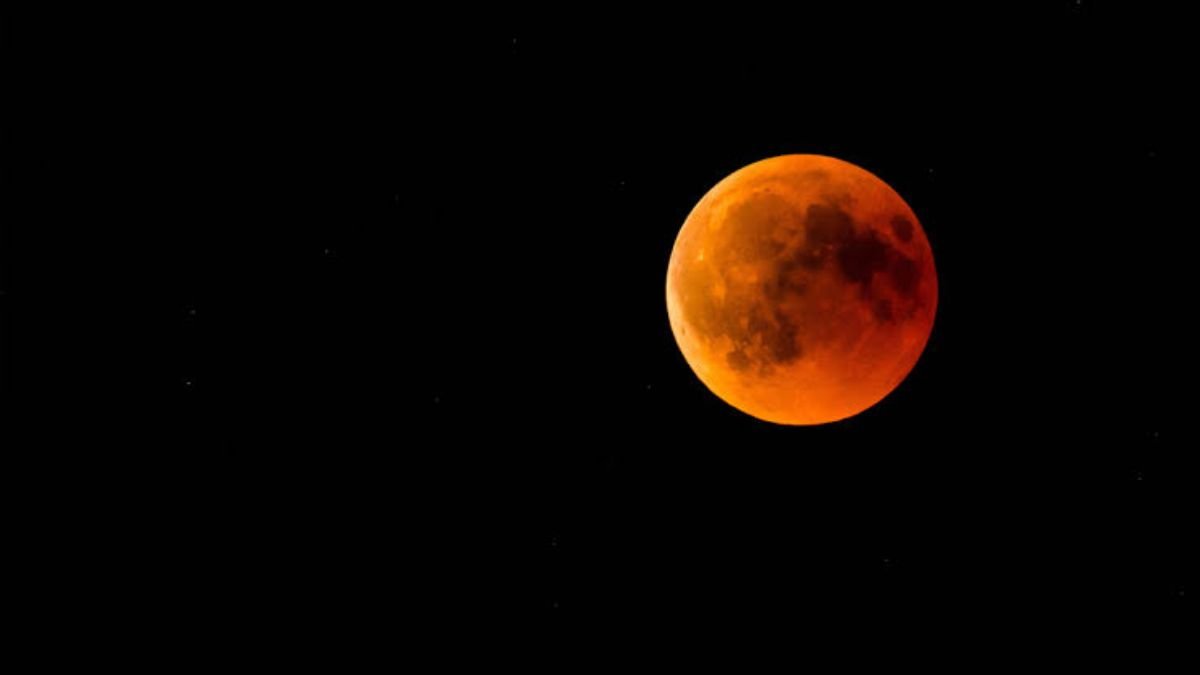
Skywatchers across California and the rest of the country are getting ready for one of the more striking astronomical events of the year.
A total lunar eclipse will sweep across North America late this month, turning the full moon a deep reddish color for several hours. Unlike a solar eclipse, this show requires no special glasses or equipment. You can simply step outside and look up.
What Causes the Reddish Glow
A lunar eclipse happens when the moon passes directly through Earth’s shadow. Because this event lines up with a full moon, viewers get an especially clear look at the shadow creeping across the lunar surface.
Instead of vanishing from view, the moon takes on what NASA describes as a rusty, coppery hue, the effect that gives these events their popular blood moon nickname. Sunlight bending through Earth’s atmosphere filters out shorter wavelengths and lets the reddish light reach the moon, producing that eerie glow.
The eclipse is set to begin the night of Thursday, August 27, and stretch into the early hours of Friday, August 28. The viewing window covers all of North America, though people on the East Coast will get the fullest, most dramatic version of the event.
At the peak moment, roughly 96 percent of the moon will be swallowed by Earth’s shadow, according to estimates from the Saint Louis Science Center.
When to Look Up in Each Time Zone
Timing matters if you want to catch the eclipse at its most vivid. The full event starts at 9:38 p.m. Eastern time on Thursday and wraps up around 3:01 a.m. Eastern on Friday, but the best moment to watch is during totality, when the moon is deepest in Earth’s shadow.
Here is when that peak moment arrives across the country:
- Eastern time: 12:12 a.m. Friday, August 28
- Central time: 11:12 p.m. Thursday, August 27
- Mountain time: 10:12 p.m. Thursday, August 27
- Pacific time: 9:12 p.m. Thursday, August 27
For anyone in California and other Pacific time zone states, that means the best viewing window falls right around 9:12 p.m., making it an easy watch for most households without staying up too late.
Who Might Miss the Best View
Not every part of the country is perfectly positioned for this one. In Hawaii and Alaska, the sun sets too late in the evening for residents there to see the eclipse reach its peak. Skywatchers in those states may still catch the tail end of the event by looking toward the moon shortly after sunset.
As with any skywatching event, local weather will play a role in how good the view actually is. Cloud cover or lingering wildfire smoke could block or dim the eclipse in some regions, so it is worth checking your local forecast as the date approaches.
Otherwise, no telescope, binoculars, or protective eyewear are needed. Just clear skies and a good spot to look up.
Comments (0)